

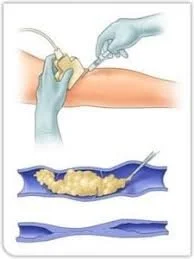

Sclerosants used in foam sclerotherapy
Both Sotradecol (sodium tetradecyl sulfate) and polidocanol are commonly used sclerosants in foam sclerotherapy, but they have some differences:
Sotradecol (Sodium Tetradecyl Sulfate)
Type: Ionic detergent sclerosant.
FDA Approval: Approved for treating varicose veins and spider veins.
Mechanism: Causes damage to the vein lining, leading to closure of the vein.
Usage: Effective for a wide range of vein sizes, from small spider veins to larger varicose veins.
Polidocanol
Type: Non-ionic detergent sclerosant.
FDA Approval: Also approved for treating varicose veins and spider veins.
Mechanism: Similar to Sotradecol, it damages the vein lining, causing the vein to close.
Usage: Known for being less painful upon injection and having a lower risk of adverse reactions compared to other sclerosants.
Side Effects: Generally fewer side effects, with a lower risk of hyperpigmentation and skin necrosis
Comparison
Pain and Comfort: Polidocanol is often preferred for its lower pain profile during injection.
Efficacy: Both are effective, but the choice may depend on the specific vein being treated and the physician’s preference.
<!-- Google tag (gtag.js) --> <script async src="https://www.googletagmanager.com/gtag/js?id=G-FQ44SYY7LE"></script> <script> window.dataLayer = window.dataLayer || []; function gtag(){dataLayer.push(arguments);} gtag('js', new Date()); gtag('config', 'G-FQ44SYY7LE'); </script>